
ORTHODONTICS

Paediatric Orthodontics
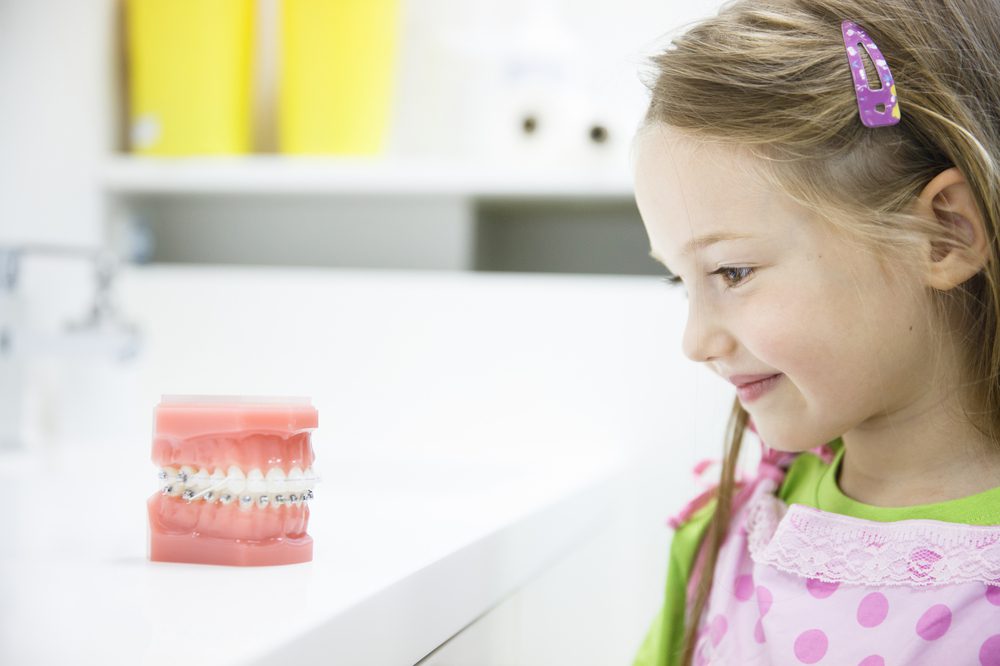
The first visit to the orthodontist is recommended at the age of 6-7 years. This is the age at which the first baby teeth are replaced and the corresponding permanent teeth erupt. Although treatment does not necessarily begin at this age, an initial check-up is important. After the assessment, the orthodontist may ask to see the child periodically (about 1-2 times a year), as the permanent teeth erupt and the face continues to develop.
If it is found that a problem needs special attention immediately, some form of early treatment may be recommended. This early treatment can help with the following:
- Preventing fracture or loss of protruding teeth.
- Eliminating habits such as thumb-sucking and tongue-thrusting out of the mouth.
- Correcting crossbites and forward positioning of the lower jaw.
- Extracting baby teeth at the right time, so that the eruption of permanent teeth occurs without problems.
- Improving the child's appearance and self-esteem.
Early treatment, which takes advantage of ongoing jaw growth and tooth eruption, can reduce the severity of a problem and make its full correction at an older age less time-consuming.

It should be kept in mind that behind beautiful smiles with perfectly straight teeth, very serious orthodontic problems may be "hidden".
If parents notice any of the following in their child, it would be a good idea to discuss it with their orthodontist:
- Early or delayed loss of baby teeth.
- Difficulty chewing or biting.
- Mouth breathing.
- Thumb-sucking.
- Crowding of teeth or their incorrect position.
- Speech difficulties.
- Biting the cheek or the roof of the mouth.
- Teeth that meet abnormally or do not meet at all.
- Facial asymmetry.
- A jaw that is too far forward or too far back
- Clenching or grinding of teeth.